AI
Your AI Can Do This. It Does Not Do That.

Julieta Raimonda
Your AI Can Do This. It Does Not Do That.
9:50
Why the build-vs-buy question for AI looks different when the product is intelligence.
The build-vs-buy question has changed shape. It used to be about cost and timeline. Now it is about capability: Can an AI model produce what this vendor product produces?
Security and marketing teams are asking that version of the question across every evaluation. For some categories, the honest answer is yes. Certain automations that once required dedicated tooling can now be assembled from model APIs and a few well-written prompts. Workflows that required a vendor contract three years ago may not require one today. The shift is real. Products that cannot answer that challenge will not survive the conversation.
But the question does not land the same way across every category. For data and intelligence products, a different kind of examination is required. The output a model produces can look nearly identical to the output of a purpose-built intelligence product. The process that produced it is not comparable. That is the actual evaluation question.
The gap between a model and a purpose-built intelligence product is not a capability gap. Ask a model to research a company, summarize an account, or profile a prospective event attendee. It will return something that looks like the answer. The reasoning applied to whatever the model retrieved may be sound. That is not where the problem lives. The problem lies in what the model used to produce that answer.
Two outputs can be structurally similar and built on entirely different foundations. That difference is not visible in the output itself. It becomes visible when the intelligence is put into action. When a rep walks into a room acting on shallow research, the foundation determines what happens. For a quick background read, shallow input may be acceptable. For intelligence that informs decisions about real accounts and real people, the depth of what went in is the product. Most evaluations miss that distinction entirely.
AI models are built around an optimization that most buyers do not fully account for when evaluating them as intelligence tools. Every input costs something. Token consumption is real. At enterprise scale, it can be significant. Organizations that moved quickly to replace human work with AI have often found the per-task cost higher than expected. Models are designed to produce a plausible answer from the minimum input required. Minimizing token consumption per query is how cost-per-call stays predictable. That optimization is also why the default behavior is to do the minimum research a query requires, not the depth a consequential decision deserves. It pulls one source, sometimes two. It constructs an answer from what it found. The response looks complete. The reasoning applied may be sound. The foundation is as thin as the input that fed it.
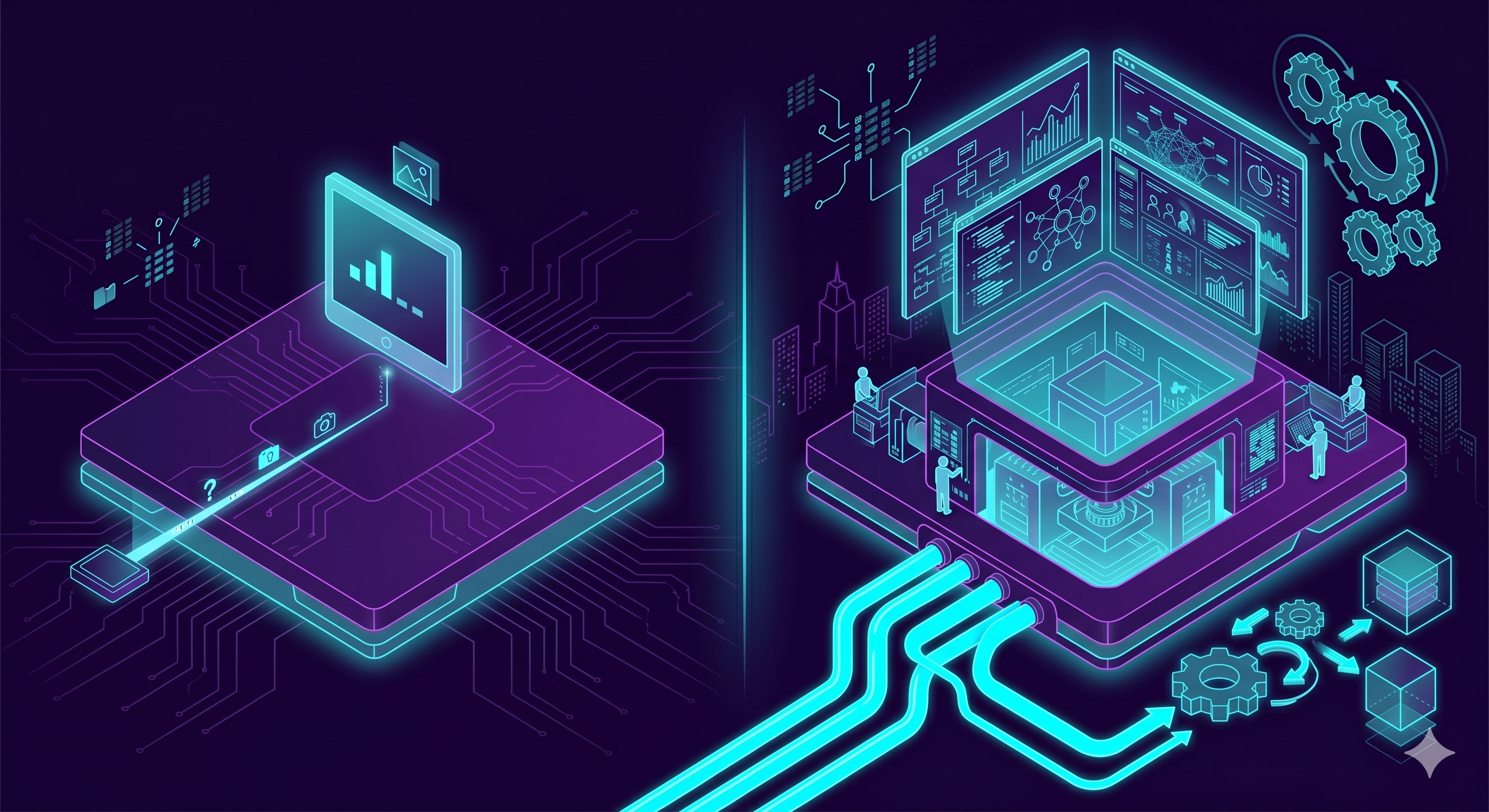
The alternative — committing a model to genuinely deep research on demand — is not a prompt away. It would require significant time and token investment for every output. And even then, it would be working from raw search results rather than structured, continuously maintained data. This is not a flaw in the model. It is a design reality. The constraint a general-purpose model operates under is not the same constraint a purpose-built intelligence product was built to satisfy. One produces plausible answers from minimal input. The other draws from a structured foundation built specifically to make each output both accurate and efficient to generate.
Those are different products. A purpose-built intelligence product starts from a different question. Not: What is the minimum input required to produce a plausible answer? But: What depth of input is required to produce a reliable one? Those two questions produce entirely different architectures.
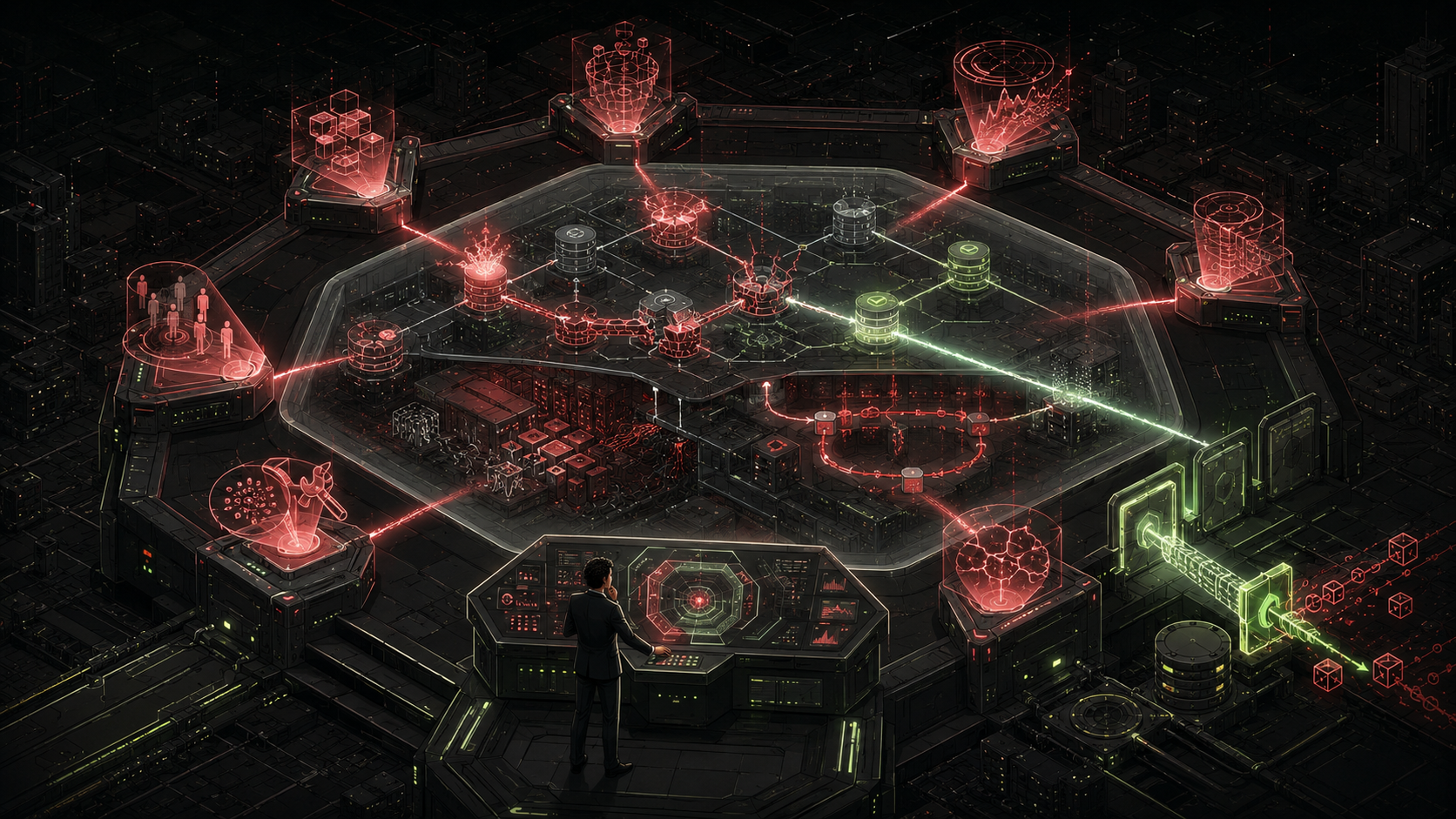
The investment in a serious intelligence product happens at the foundation level. The research is aggregated, structured, and maintained before any individual output is ever generated. The result is not a product that spends more on every query. The work that would take months to replicate has already been done. The research underlying each output is not a paragraph assembled from a single search. It is a structured body of sources built specifically for that record, drawing from data accumulated over months and years. The output a model produces and the output a purpose-built product produces may look similar on the surface. The process that produced them is not comparable in scope, in preparation, or in depth. That gap is not a prompt configuration away from being closed.
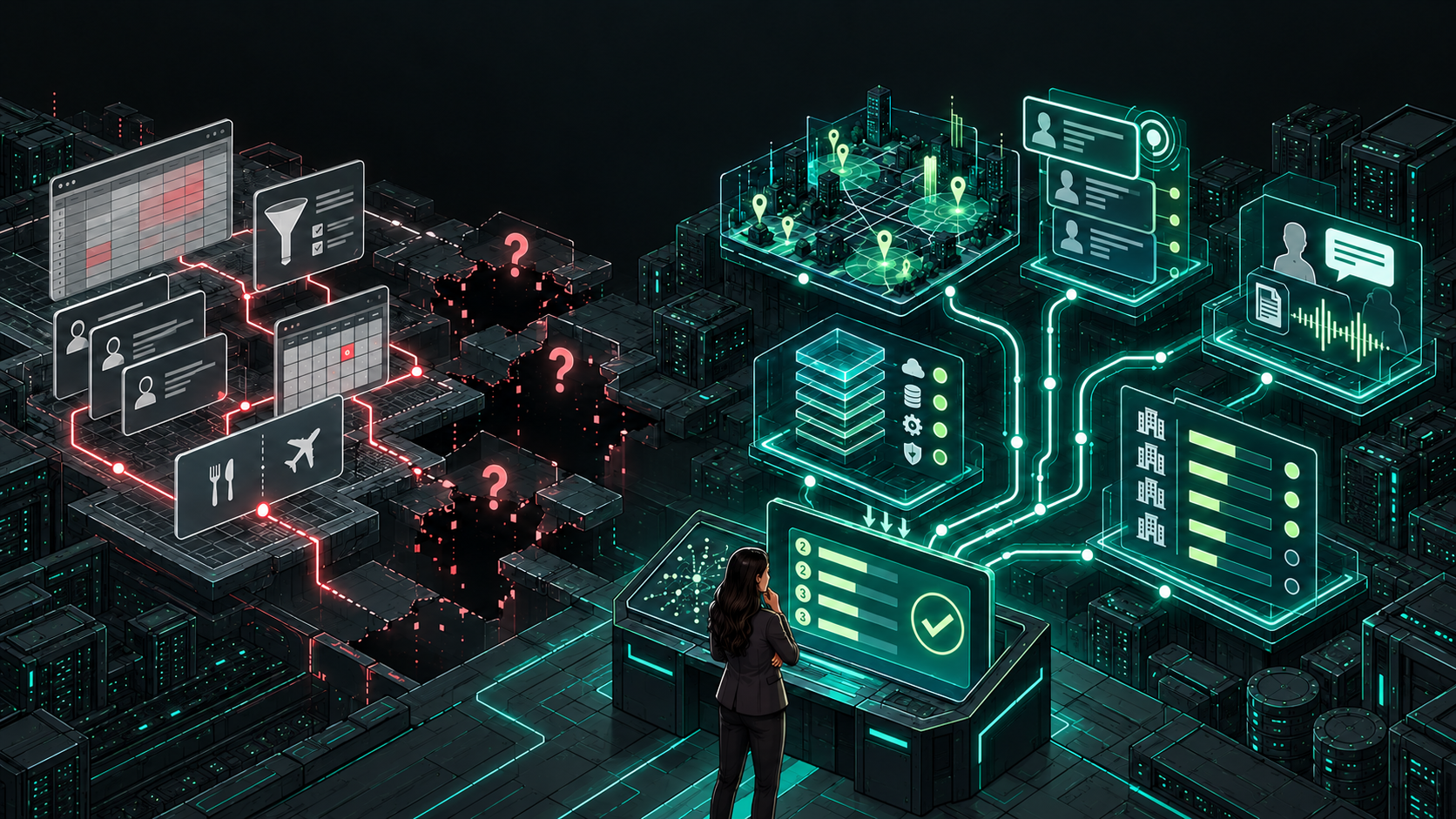
The cybersecurity field illustrates what that gap looks like in practice. More than 6,000 events run annually across the landscape. Sponsorship activity, attendee patterns, and organizational investment data go back years. The number of companies moving through this market at any given time is in the thousands. A model asked to research a company’s event presence will return what it can surface through a general search. And that is usually only a fraction of the total activity.
Invite history, past attendance patterns, sponsor relationships, and category prioritization signals are not freely available on the open web. A purpose-built database built through structured, ongoing collection holds layers of that data. The gap between what a model surfaces and what that database contains is not a prompt quality problem. No prompt closes it. The only path to closing it is to have built the collection infrastructure in the first place.
By the time a team commits to that, a well-built product has already been running for years. The collection infrastructure is not the hard part. Keeping it current, accurate, and expanding while the market moves is the hard part. A model cannot do that incrementally. It has to start from scratch with every query.
Teams evaluating an internal build rarely account for the full commitment. Matching the research depth of a purpose-built intelligence product is not a configuration problem. It is a months-long infrastructure build. That build requires decisions about sourcing, aggregation, quality control, and ongoing maintenance. It requires dedicated effort to get right and continuous effort to keep current. The moment the internal build reaches the current state of the product being replaced, the product has moved. The team that built the product has been improving it the entire time, while the internal build was catching up. The goal line shifts. It shifts faster on the vendor side because that is the entire organization’s focus. Teams that commit to building toward where a product is today will arrive to find it meaningfully ahead of where it was when they started. The gap does not close at the rate the initial evaluation assumed.
There is also a maintenance reality that most build plans underestimate. A database that goes stale within months of being built is not an intelligence product. It is a snapshot. The market it was designed to track keeps moving. New sponsors enter. Attendance patterns shift. Companies that were not buying last quarter are evaluating this one. An intelligence product that does not update continuously is not intelligence. It is history. Keeping intelligence current requires ongoing commitment that most internal teams are not resourced to sustain.
The practical implication is a more precise version of the question. Not: Can a model produce something that resembles the output of a purpose-built intelligence product? It usually can. The real question is whether the output from a single search and the output from a deep research infrastructure are interchangeable. That depends on the decision being made. For a quick background read, the difference may not matter. For intelligence that informs how a vendor approaches a CISO, the depth of what went in determines whether it is worth acting on. The same applies to structuring an event invitation list or building an account strategy before a field conversation. The evaluation needs to answer that question honestly before drawing a conclusion about build versus buy. Output similarity is not the same as input equivalence. Treating them as the same is how teams make the wrong call.
Delve Risk was built toward the depth-first constraint from the start. The CYBE^R® Portal maps sponsorship data, event attendance patterns, and company profiles across the cybersecurity landscape. The scale reflects a deliberate commitment to going further than a model running on its own would go. ISAPs (Intelligent Sales Account Plans) draw from that same foundation. Every relevant source is applied before a rep or field marketer enters a room. The output looks like something a model could produce. What produced it is not the same process.
For teams deciding whether to build or buy intelligence for field marketing and sales decisions, the honest starting point is not a capability comparison. It is a question about depth: How much research went into it, and how long the infrastructure that produced it has been running. That question has a clear answer on both sides of the comparison. A model doing a single query and a product aggregating structured data for years do not produce equivalent outputs. Treating them as equivalent because they look similar is the mistake. The evaluation that catches it before a buying decision is made is doing the right work.