


Busting the “AI Expert” Myth
Scroll through LinkedIn for more than five minutes, and you’ll see self-proclaimed AI experts everywhere. Titles are updated overnight.
Headlines scream about “AI masters.” Everyone’s rushing to be the authority.
Here’s the truth no one wants to admit: There are no AI experts.
Not yet.
Artificial intelligence is being built in real time. Models update weekly. New tools drop daily. What worked in February is outdated by May. This isn’t a static technology you can “master” like Photoshop or Excel. It’s a moving target.
The people who will win in the AI era are not the ones trying to stake a claim as all-knowing authorities. They’re the ones willing to stay learners forever — AI students.
At Delve Risk, we believe this shift matters most in cybersecurity sales and marketing. Because in an industry defined by trust, speed, and competitive edges, your ability to learn, adapt, and apply AI is the difference between leading and being left behind.
This article is about why the student mindset beats the expert illusion, why impostor syndrome is actually a good sign, and how cybersecurity sales and marketing professionals can build practical, AI-powered workflows in just eight weeks.
The Expert Illusion
The idea of an “AI expert” is seductive. Clients want experts. Employers want experts. And let’s be honest — it looks good in a LinkedIn headline.
But AI doesn’t work like that.
Every major model — ChatGPT, Claude, Gemini, Grok Imagine, HeyGen, NotebookLM — is evolving at lightning speed. New capabilities appear overnight. Yesterday’s limitations vanish without warning.
That means no one can claim permanent mastery. If you’re standing still, you’re already falling behind.
The real risk isn’t admitting you don’t know everything — it’s pretending you do. Believing in “expertise” leads to complacency. It makes you stop experimenting. And in AI, the moment you stop experimenting, you stop learning.
The Student Mindset
Being an AI student means approaching every tool, every update, every prompt like a test. You don’t assume you know how it works. You explore. You refine. You break things to see how they can be rebuilt.
This mindset is liberating. It gives you permission to be curious, playful, even wrong — because being wrong is how you find what works.
For cybersecurity professionals, it’s more than liberating. It’s survival.
- Sales teams who don’t adapt will waste hours on manual prospecting while competitors automate workflows with AI.
- Marketing teams that don’t adapt will keep producing content the old way while competitors build AI-driven pipelines that publish, repurpose, and analyze at scale.
Students are faster than experts. Students learn from iteration. Students don’t cling to old methods.
And in this field, students win.
Impostor Syndrome in the Age of AI
Here’s the twist: many professionals already feel like impostors when they use AI.
Graphic designers see Midjourney or Grok Imagine generate images in seconds and wonder if their craft is still valued.
Marketers see NotebookLM draft a campaign outline and question their role.
Salespeople watch ChatGPT draft better cold emails in 15 seconds than they could in 30 minutes.
It feels like cheating. It feels like being replaced. It feels like fraud.
But impostor syndrome in the AI era isn’t a weakness. It’s proof you’re in learning mode. It’s a sign you’re confronting something new, something uncomfortable, something that demands growth.
The irony? The people who don’t feel like impostors are usually the ones faking expertise.
If you’re a little uncomfortable, a little unsure, a little overwhelmed — congratulations. You’re exactly where you should be.
Cybersecurity Sales: AI as Your Copilot
Let’s make this real.
Imagine giving your sales team just 15–30 minutes a day for eight weeks to learn and apply AI. No theory. No fluff. Just scenarios, prompts, and workflows they can use immediately.
Here’s what happens when sales professionals become AI students:
Over eight weeks, sales reps layer Delve Risk intelligence into AI workflows. They start with the basics — drafting outreach emails, researching prospects, and building prompt libraries.
Then they scale into personalization, objection handling, meeting prep, CRM enrichment, and proposal support. Each week adds a new building block, turning AI from a drafting tool into a true copilot.
The result is a complete AI Sales Playbook — prospect research templates, outreach libraries, objection scripts, CRM workflows, and deal strategy — all powered by Delve Risk insights, structured into your Intelligent Sales Account Plan (ISAP).
By the end of 8 weeks:
- AI = scale, speed, and drafting.
- Delve Risk = the intelligence AI can’t see.
- Together = workflows that are personal, consultative, and faster to close.
No matter the framework — MEDDIC, Challenger, SPIN, or consultative — Delve Risk fuels the intelligence that makes AI workflows work.
Cybersecurity Marketing: AI as Your Creative Engine
Now imagine your marketing team following the same 8-week structure — but instead of sales workflows, they build a content pipeline powered by AI.
Again, just 15–30 minutes a day. Structured. Practical. No guesswork.
In eight weeks, marketing teams learn how to combine Delve Risk inisghts with AI-powered creative tools. They begin by building a content foundation (blogs, social posts, and visuals), then expand into video, podcasting, and campaign automation.
With Delve Risk’s Event Calendar and Event Planner guiding timing and themes, every AI-generated asset — from visuals and videos to podcasts and campaigns — lands with relevance.
By the end, teams have a complete AI Marketing Playbook: Content workflows, creative pipelines, campaign flows, and analytics dashboards, all grounded in real-world intelligence and aligned with your Intelligent Sales Account Plan (ISAP) to ensure sales and marketing work from the same playbook.
By the end of 8 weeks:
- AI = creative scale, automation, content generation.
- Delve Risk = strategic intelligence (snapshots, events, planners).
- Together = marketing workflows that are timely, personalized, and high-impact.
No matter the format — blog, video, podcast, campaign — Delve Risk powers AI so outputs land with relevance.
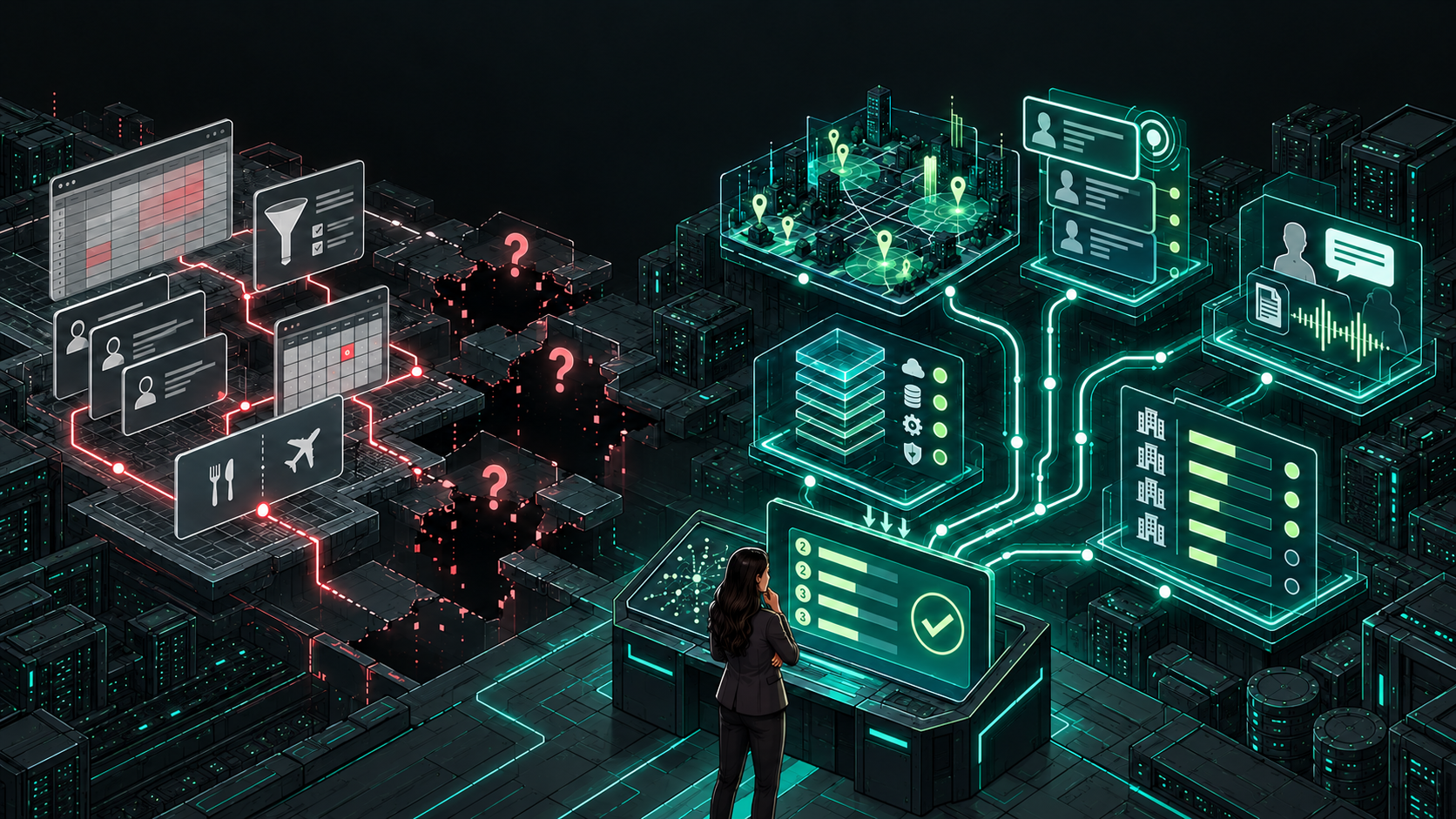
The Outcome: From Chaos to Workflow
By the end of eight weeks:
- Sales teams walk away with a complete AI Sales Playbook — prospect research templates, outreach libraries, objection scripts, meeting prep docs, CRM workflows, and proposal support — all structured into their ISAP.
- Marketing teams finish with a Marketing AI Playbook — content prompts, visual workflows, video/podcast automation, campaign flows, and analytics dashboards — connected back into the same ISAP so alignment is built in.
This isn’t theory. It’s not training for the sake of training. It’s workflow. Tangible, operational, and ready to use.
That’s the difference between dabbling in AI and becoming an AI student.
Being an AI Student-for-Life
Tools will change. Prompts will evolve. Workflows will shift.
What won’t change? The need to keep learning.
In cybersecurity sales and marketing, where the competitive edge is razor-thin, the winners won’t be those who call themselves “AI experts.” They’ll be the ones who never stop learning — testing, refining, adapting.
The future belongs to the students.
At Delve Risk, we’re committed to staying students right alongside you — building, experimenting, and sharing what works. That’s exactly what the Delve Risk WTA Program delivers: your Intelligent Sales Account Plan (ISAP) to empower your teams sales models.
The Call to Learn
The age of AI won’t be won by those who think they’ve figured it out. It’ll be led by the professionals who embrace the discomfort of being students forever.
So the next time you see someone calling themselves an AI expert, remember this: Expertise expires. Curiosity doesn’t.
Keep learning. Keep testing. Keep building.
That’s how you win.