
Set Your Collision Course: Why the Most Dangerous Thing in Sales is Avoiding Impact

Julieta Raimonda
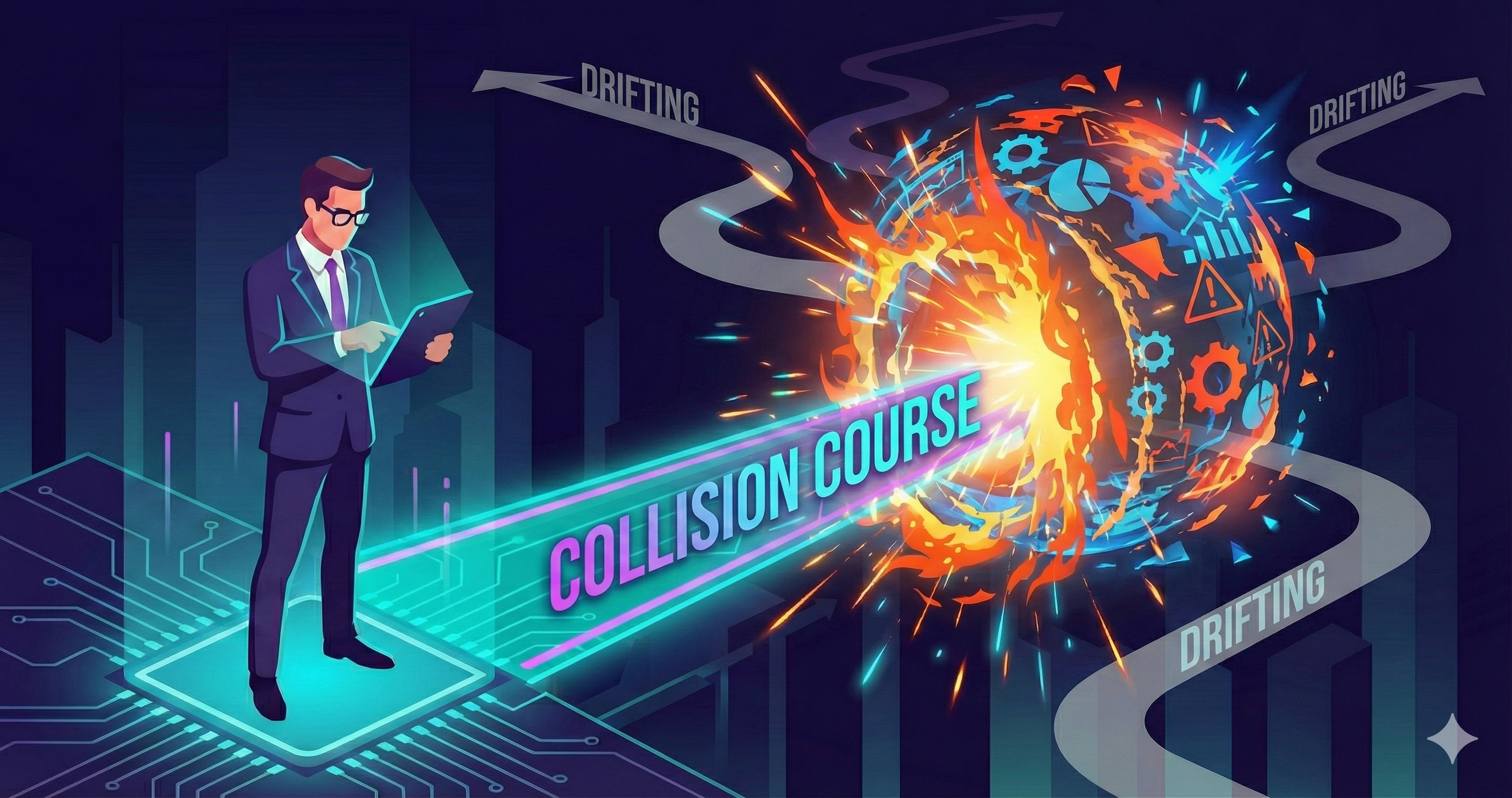
In aviation, a "collision course" is a catastrophe. In cybersecurity sales, it is a requirement.
It is February 2026. The optimism of the New Year kickoff has faded. The SKO hangovers are gone. Now, you are staring at a Q1 quota that looks significantly larger than it did three weeks ago.
The natural instinct in February—the "slump month" before the major spring conference circuit kicks off—is to retreat. You hide behind the tech stack. You rely on automated sequences. You treat "showing up" as logging into Salesforce and clearing your tasks.
But here is the hard truth: Safe paths don't lead to closed deals.
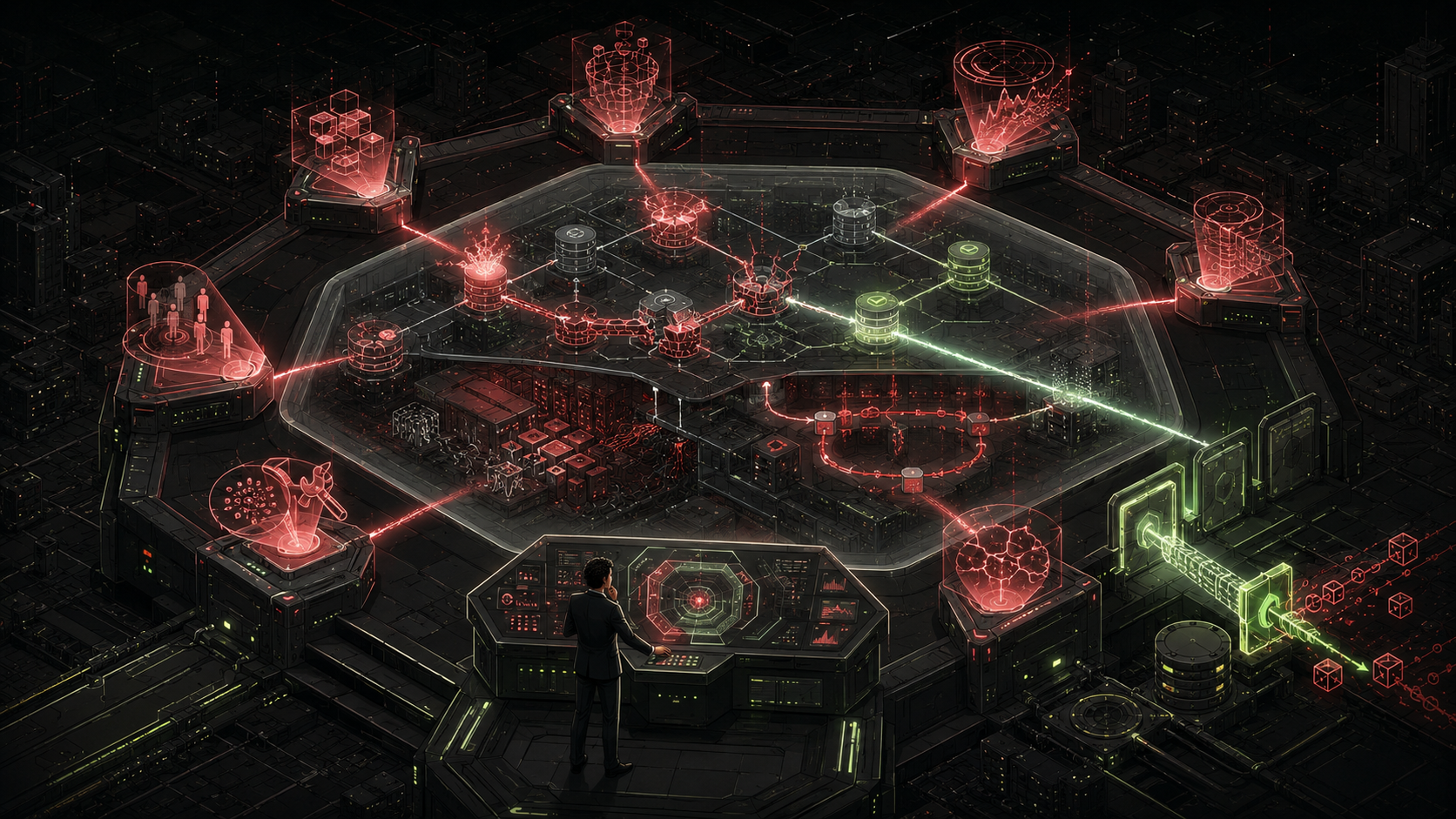
In a market saturated with AI-driven noise, your prospects are insulated. They have firewalls, gatekeepers, and spam filters designed to keep you out. You cannot drift into their orbit and hope they notice you. You have to purposefully steer yourself into their path.
This month, we are redefining what it means to "Show Up." We are moving beyond the passive idea of "presence" and embracing a more aggressive, intentional strategy: The Collision Course.
A collision course is not about recklessness. It is about the calculated engineering of high-impact moments. It is about positioning yourself—physically, digitally, and mentally—so that your value proposition slams directly into your prospect's reality.
Here is how to set your course for 2026.
Phase 1: Pre-Collision Intelligence (The Setup)
You cannot collide with a target you cannot see.
Most sales reps "show up" to a conference or a Zoom call hoping for luck. They wander the expo floor at RSAC hoping to bump into a CISO. That isn’t a strategy; that’s loitering.
An engineered collision requires coordination. Before you ever pack your bag or open your laptop, you need to know exactly where the impact point is.
- Map the Org Chart: You aren't just selling to a company; you are selling to a specific political web. Who holds the budget? Who feels the pain? Who is the blocker? If you show up to a meeting without knowing the internal hierarchy, you are flying blind.
- Know the Event Landscape: As we approach the spring circuit, do not just buy a pass. Know who is attending. Know which sessions your target accounts are sponsoring.
- The "Serendipity" Lie: When a top-performing rep runs into a key prospect at a coffee shop near the Moscone Center, it looks like luck. It isn’t. That rep knew the prospect was speaking at 10:00 AM, knew the session ended at 10:45 AM, and knew the closest coffee shop was two blocks away. They put themselves on a collision course.
The Takeway: Showing up starts days before the interaction. It starts with data.
Phase 2: The Physical Collision (The Hallway Track)
In 2026, many of your competitors have convinced themselves that virtual selling is "more efficient." They are wrong. Efficiency is not effectiveness.
When you physically show up at an event, you are there to exploit the Human Bandwidth Advantage. A physical collision bypasses the skepticism filter that exists on every video call.
But to make these collisions count, you have to change your behavior on the floor.
1. Head Up, Phone Down
The single biggest collision-killer is the smartphone. We see it at every conference: Reps standing in their booths, heads down, scrolling LinkedIn, waiting for someone to interrupt them.
- The Reality: A CISO walking the floor scans for eye contact. If you are looking at your screen, you are signaling "I am busy" or "I am bored."
- The Fix: When you are "on," you are radically present. Your phone is in your pocket. You are scanning badges. You are reading micro-expressions. You are making yourself a target for interaction.
2. The 30-Second Context Switch
In a physical collision, you don't have time for a slide deck. You have seconds to prove you belong in their world.
- The Move: Don't pitch product. Pitch context.
- Bad: "Hi, we do cloud security, can I scan your badge?" (This is a glancing blow, not a collision).
- Good: "I see you're with [Company X]. I saw the 10-K report about the new Asian expansion. That creates a nightmare for data sovereignty, doesn't it?"
- This is a head-on collision with their specific pain. It stops them in their tracks.
3. The "Off-Hours" Operation
The most valuable collisions happen when the expo hall lights go down. "Showing up" means extending your day into the dinner and drinks hours—not to party, but to facilitate. The best reps don't just attend dinners; they curate them. They collide their prospects with other prospects, becoming the hub of the network.
Phase 3: The Digital Collision (Commanding the Square)
We know you can't be on the road 365 days a year. The bulk of your collisions will happen inside a Zoom square.
But there is a massive difference between "attending a meeting" and "commanding the screen." Digital presence is often weak, distracted, and low-impact. To create a digital collision, you must be intense.
1. The Camera is Your Weapon
In 2026, "Zoom Fatigue" is an excuse used by the losing side.
- If your camera is off, you are hiding.
- If your camera is on but you are looking at a second monitor, you are distracted.
- If your camera is on and you are staring down the lens, you are present.
The Fix: Treat the webcam lens like the prospect's eye. Radical eye contact on video creates a psychological pressure—a positive intensity—that forces the prospect to pay attention.
2. Active Listening as a Collision Tactic
Most reps listen to respond. Elite reps listen to intercept.
When you are multitasking (Slack, email, CRM) during a call, you miss the "throwaway" lines that contain the real gold.
- The Prospect mumbles: "...yeah, legal is dragging their feet on the new compliance vendor..."
- The Distracted Rep: Misses it. Moves to the next slide.
- The Present Rep: COLLIDES with that statement. "Pause there. You mentioned legal is blocking compliance. Is that going to impact your Q2 audit timeline?"
Suddenly, you aren't presenting; you are solving. You have collided with the real problem.
Phase 4: The Crisis Collision (Running Into the Fire)
It is easy to show up when you are sending a contract for signature. It is easy to show up for the victory lap.
But the true test of a cybersecurity partner—and the salesperson representing them—is showing up when the collision is literal. When things go wrong.
- The Breach: If your client has an incident, do you go silent? Or do you put yourself on a collision course with their stress?
-
- The Script: "I saw the news. I know you're swamped. I'm here to run interference with support or get you resources. I'm not selling anything today, but I am here."
- The Outage: When your product fails, the mediocre rep hides. The elite rep picks up the phone.
-
- The Script: "I’m calling to tell you we messed up. Here is the fix plan. I am staying on this collision course until you are green again."
This is "showing up" when it hurts. This converts transactional buyers into lifelong champions.
Phase 5: Internal Collisions (The Team Sport)
Finally, stop trying to avoid collisions with your own team. The "Lone Wolf" AE who tries to do it all alone is a dying breed in complex cyber sales.
You need to collide with your internal resources to generate sparks.
- Collide with your SE: Don't just toss a demo over the fence. Show up to the prep call with a strategy. Challenge their demo flow. Make the prep session intense so the client session is smooth.
- Collide with Marketing: Don't complain about leads in private. Show up and tell them what is working. "That blog post on Ransomware trends? I used it to open three doors this week. Give me more like that."
The February Mandate
The easy path is to coast through February. To wait for the marketing leads to come in. To wait for the RSAC invites to go out. To avoid friction.
But friction is where the traction is.
This month, look at your calendar. Look at your travel schedule. Look at your prospect list.
Are you drifting? Or are you steering?
- Audit your meetings: If you aren't going to show up 100% focused, cancel it.
- Audit your travel: Don't go to an event unless you have a plan to intercept key targets.
- Audit your mindset: Stop avoiding the crash.
The cybersecurity market is crowded, loud, and chaotic. In a world of noise, the person who sets a deliberate course, prepares for impact, and shows up with intensity is the one who wins.
Set your coordinates.
Go make contact.
Delve Risk empowers cybersecurity sales and marketing teams with the intelligence to set the right course. From deep-dive ISAPs (Intelligence Sales Account Plan) that reveal a complete sales playbook, to our comprehensive Cyber Events Calendar that tells you where the competition will be. The Delve Risk Cybear (Cybe^r ®) Portal provides the data you need to engineer the collisions that win deals. Get a demo today.